Supply portfolio / Frozen protein
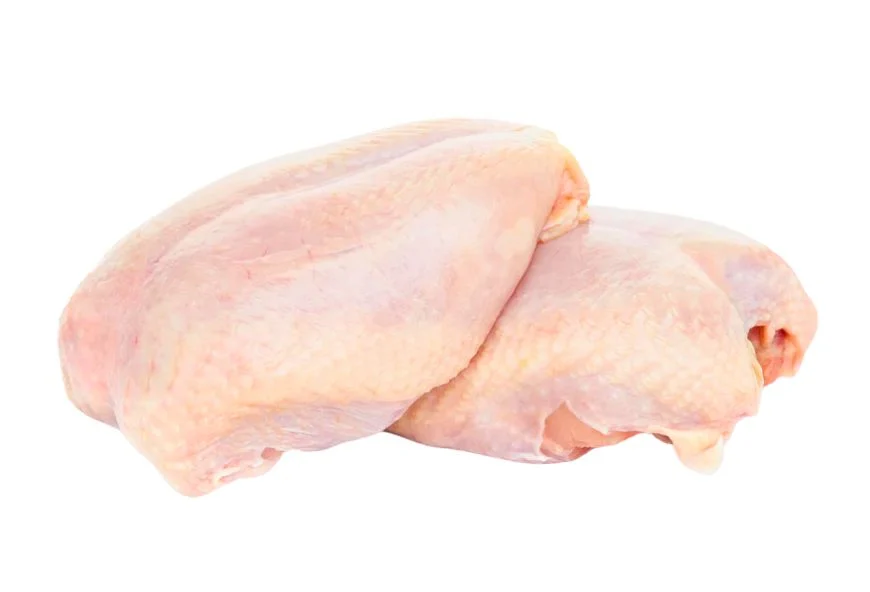
Whole chicken breast — skin on
Skin-on whole breast preserves a presentation suited to particular cooking and retail formats. Clarify bone status and whether both breast lobes remain joined.
Request a tailored offer ↗Discuss your specification by email ↗Grade, availability and destination eligibility confirmed per offer.
Take the detail with you.
Product research, nutrition references and a fillable purchasing brief to save and share with your team.
Download product data sheet 3 pages · Fill, save and return by email.Whole chicken breast with the skin retained is a purchasing presentation for retail cutting and food-service preparation. A useful offer starts with the cut definition: skin-on does not, by itself, tell your receiving team whether the breast is bone-in or boneless, whether the two lobes remain joined, or what trim is included. Describe these details before comparing carton prices. Availability and the offered production programme are confirmed individually.
Agree the cut your operation actually needs
Provide a cut diagram or a clearly labelled reference photograph alongside the commercial name. Ask the supplier to confirm the proposed bone status, joined or separated presentation, tender inclusion and any attached tissue. The UNECE chicken-meat reference supports consistent anatomical descriptions; the exact offered specification still needs written agreement.
- Bone and cutting line: identify the required presentation and ask which bones or attachments, if any, remain.
- Skin coverage: describe acceptable coverage, tears, loose skin and surface trim rather than relying only on the words skin-on.
- Piece weight: state a target band, permitted variation and how out-of-band pieces are handled. Include the sampling basis for arrival checks.
- Preparation: confirm plain or further-treated product and request any ingredient or treatment declaration needed for your application.
Plan portions and yield before ordering
A retailer cutting portions and a kitchen roasting whole pieces may need different weight bands and trim rules. Share the portion size or finished presentation you want, together with the equipment and preparation method used by your operation. Ask for a representative sample where practical, and record the agreed inspection criteria. Do not assume that two skin-on breast offers will have the same usable yield: bone status, trim and piece size must be compared on the same basis.
Choose packing around receiving and storage
Specify the preferred freezing presentation and whether your team needs pieces that can be separated for portioning or a different pack arrangement. Ask for the primary wrapping, pieces or packs per carton where applicable, carton net weight and outer dimensions. Confirm how lot identity, production information and establishment identification appear on the label. For palletised deliveries, obtain the proposed pallet layout so your receiving team can assess handling and storage space. Packing options remain subject to the written offer.
Cold-chain records and arrival checks
Request product-specific storage instructions, validated shelf life, minimum remaining life on arrival and the agreed transport conditions. Confirm which temperature records accompany the shipment. At receipt, reconcile carton quantities and lot codes with the packing list, inspect wrapping and carton condition, and document deviations using the agreed inspection and claims process. Your handling and thawing procedures should follow the offered product instructions and your operation’s food-safety controls.
Confirm destination documentation early
Identify the importing country and proposed receiving port or named place. Ask which production establishment is being offered and what evidence supports eligibility for that destination. Confirm sanitary documentation, label language, traceability records and any buyer-specific test or certification requirements before committing to shipment. If Halal certification is required for your poultry programme, request evidence covering the particular establishment and offered product.
Build a brief your suppliers can compare
Include bone status, joined-lobe requirement, skin and trim criteria, piece weight band, packing, quantity, purchase frequency, destination and preferred trade terms. Explain any sample-approval process. Send your chicken-breast purchasing brief or explore the frozen-protein catalogue. The product page is a starting point for review; origin, availability, eligibility and final commercial conditions are established in the individual offer.
Continue your sourcing brief
IN THE SAME
FAMILY.
Your next supply programme
MAKE THE
SPECIFICATION COUNT.
Tell us what you need, where it’s going and how you’ll use it. Our team will assess the product, packing and commercial basis for your offer.
Build a trade inquiry ↗