
Supply portfolio / Frozen protein
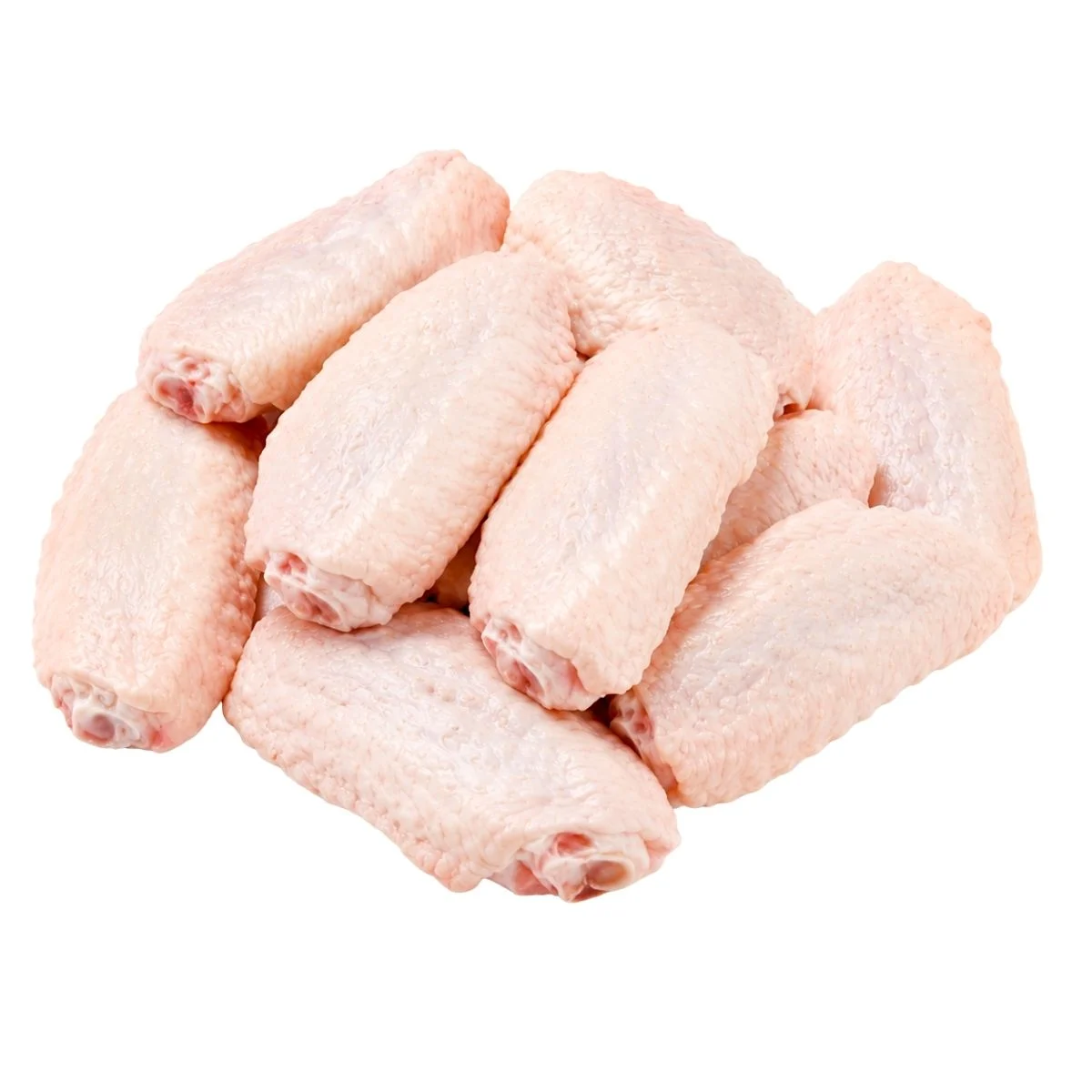
Chicken middle-joint wings
Middle-joint wings, often called flats, offer a defined two-bone portion. Piece size and joint-cut quality influence presentation and portion control.
Request a tailored offer ↗Discuss your specification by email ↗Grade, availability and destination eligibility confirmed per offer.
Take the detail with you.
Product research, nutrition references and a fillable purchasing brief to save and share with your team.
Download product data sheet 3 pages · Fill, save and return by email.Middle-joint chicken wings, often called flats, are a defined two-bone wing portion. Food-service buyers and prepared-food processors should compare cut identity, piece sizing and freezing presentation together, rather than rely on a carton photograph or a nominal piece count.
Applications
Suitable purchasing discussions include portion-controlled food service and prepared-food processing. Tell the commercial team whether the product will be cooked from frozen, thawed for preparation or further processed. Your own process trial should establish usable yield; a raw piece-weight range is not a cooked-yield guarantee.
What to specify
The CFIA chicken nomenclature, item 71305-11, describes the second wing segment with the drumette and tip removed, retaining the radius and ulna. Use that reference to clarify the requested cut, not as a claim of Canadian approval or certification for an offered shipment.
- Confirm flats only, rather than mixed drumettes and flats or a flat with the tip attached.
- State the requested piece-weight band, units, permitted variation and how the sizing sample will be selected.
- Agree the joint-cut presentation and acceptance criteria for broken bones, residual feathers, skin damage and other defects relevant to your process.
- Ask whether the offer is individually frozen or block frozen, and specify any requirement for pieces to separate before preparation.
Request a representative specification and sample label. If an offer gives pieces per kilogram, ask whether it is a measured lot result, a target or an estimate. Do not treat it as a guaranteed count in every carton unless the written specification says so.
Packing & handling
Ask which inner-bag or bulk-liner formats can be offered, then agree carton net weight, packaging tare, lot identification and carton marks. Identify whether the offered product is glazed and how its net contents will be assessed. Our chicken net-weight and carton-check guide separates product weight, packaging and any glaze assessment.
Obtain written frozen-storage and transport instructions for the actual product and destination. Plan a continuous cold chain, receiving-temperature records and storage capacity before arrival. Any opening, sampling or thawing should follow the receiving operation’s food-safety procedures; do not infer shelf life or permitted handling temperatures from another product’s offer.
Documentation and destination checks
Ask for the proposed production establishment, origin and lot-traceability basis, and have the importer confirm destination eligibility and required sanitary documents for that establishment and product. If Halal certification is required, request evidence covering the actual offered production programme and destination. Neither a catalogue listing nor a reference photograph establishes market approval.
Agree who checks labels, carton counts, net-weight records and shipment documents before dispatch. Record the inspection timing and contractual route for discrepancies so the receiving team knows what evidence to retain.
Build your purchasing brief
Send the flat-only cut definition, quantity in metric tonnes, shipment frequency, piece-weight band, freezing format, inner packing, carton net weight, destination port, shipment window and preferred trade term with its named place. Add sampling and acceptance requirements. Compare presentations using the chicken presentations guide, or send your purchasing brief. Availability, origin, packing, final specifications and destination eligibility remain subject to the written offer.
Continue your sourcing brief
IN THE SAME
FAMILY.
Your next supply programme
MAKE THE
SPECIFICATION COUNT.
Tell us what you need, where it’s going and how you’ll use it. Our team will assess the product, packing and commercial basis for your offer.
Build a trade inquiry ↗