
Pork Trimmings: Specify Lean, Fat and Lot Acceptance
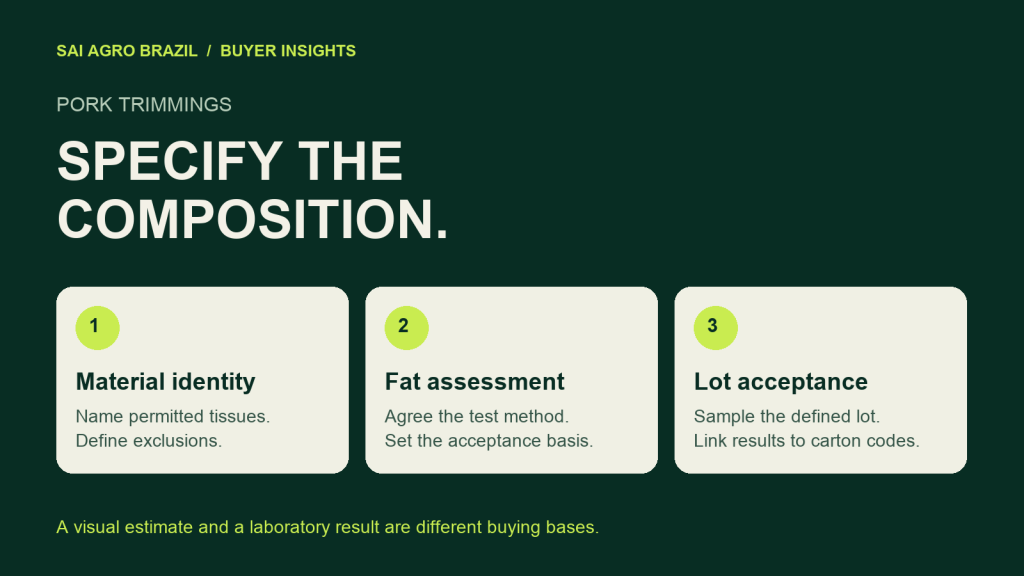
Two quotations for frozen pork trimmings can use the same lean percentage and still describe different buying propositions. One may rely on a visual assessment; another may attach a laboratory result to a defined production lot. A processor needs to know which material, measurement and acceptance procedure sit behind the number before comparing offers.
This guide develops the composition question within our pork shipment-planning guide. It is a purchasing checklist for importers and processors, not a specification for an available lot.

Start with the permitted material
Write down what the trimming may contain and what must be excluded. The CFIA wholesale nomenclature, item 418, provides one reference description: it excludes bone, cartilage, skin and specified heavy connective tissues and glands, and does not permit ground product under that item. It also distinguishes automatically recovered material unless otherwise specified. A named reference only helps when both parties agree which provisions and deviations apply.
Ask whether the offer concerns ordinary cut trimmings, a particular source cut, ground material or another presentation. List any restrictions your formulation requires. A photograph may help discuss appearance, but cannot establish tissue composition, fat content or compliance with a written specification.
Separate a visual lean description from an analytical result
If a quotation states “80/20”, ask what the supplier means. Is it a target composition, a visual estimate, a measured fat result or a shorthand commercial description? Which component does each number describe? Do not convert a supplier’s visual lean description into an assumed laboratory guarantee.
For a measured requirement, request the analytical method, reporting basis, sample identification and acceptable tolerance. Ask whether a certificate describes the proposed shipment lot or merely illustrates a previous result. Your technical team should decide whether the test is appropriate to its recipe and acceptance criteria.
Define the lot before defining the sample
A result becomes more useful when it can be traced to the product you receive. Agree the production dates or batch boundaries covered by the lot, whether material from different lots may be combined, and how cartons connect to the sampling record. Set out who takes samples, how they are selected, who tests them and how a disagreement will be assessed.
Consider the practical questions in advance: will the shipment comprise one composition across all cartons, or separately identified lots with different results? Does a composite sample answer your acceptance question, or do you need additional lot-level information? These decisions belong in the purchase specification rather than in an assumption made after arrival.
Compare the same four fields in every offer
- Identity: source material, permitted tissues and exclusions.
- Composition: target, measurement method, tolerance and reporting basis.
- Evidence: proposed lot identification, sampling arrangement and result supplied.
- Presentation: freezing format, block or loose form, inner wrapping and carton net weight.
A price comparison should flag any missing field. For example, an offer supported by an agreed lot test is not automatically equivalent to one carrying only a target description. Ask the second supplier to explain its basis; do not silently fill the gap with the first supplier’s assumptions.
Keep composition checks separate from destination eligibility
A satisfactory fat result does not establish permission to import the product. MAPA’s establishment export-eligibility service explains that destination requirements and sanitary certification arrangements must be checked for the proposed establishment. Ask for the production-establishment identity and the documents your importing team needs for the actual destination.
Also agree storage instructions, remaining shelf life, transport records and an arrival inspection process. Sampling or thawing for a test must follow your receiving operation’s approved procedures. An analytical acceptance plan is not a replacement for food-safety controls.
Send a brief your technical team can approve
Include intended processing use, permitted material, required composition and method, lot and sampling requirements, pack format, net weight, quantity, purchase frequency, destination and shipment window. Mark any acceptable alternative explicitly. Keep a dated version with the written offer so a later packaging change does not silently alter the composition agreement.
Explore frozen pork trimmings, use the product page’s fillable data sheet, or send your purchasing brief. SAI Agro Brazil’s team can review the requested programme; availability, specifications, establishment eligibility and commercial terms are confirmed in the individual written offer.